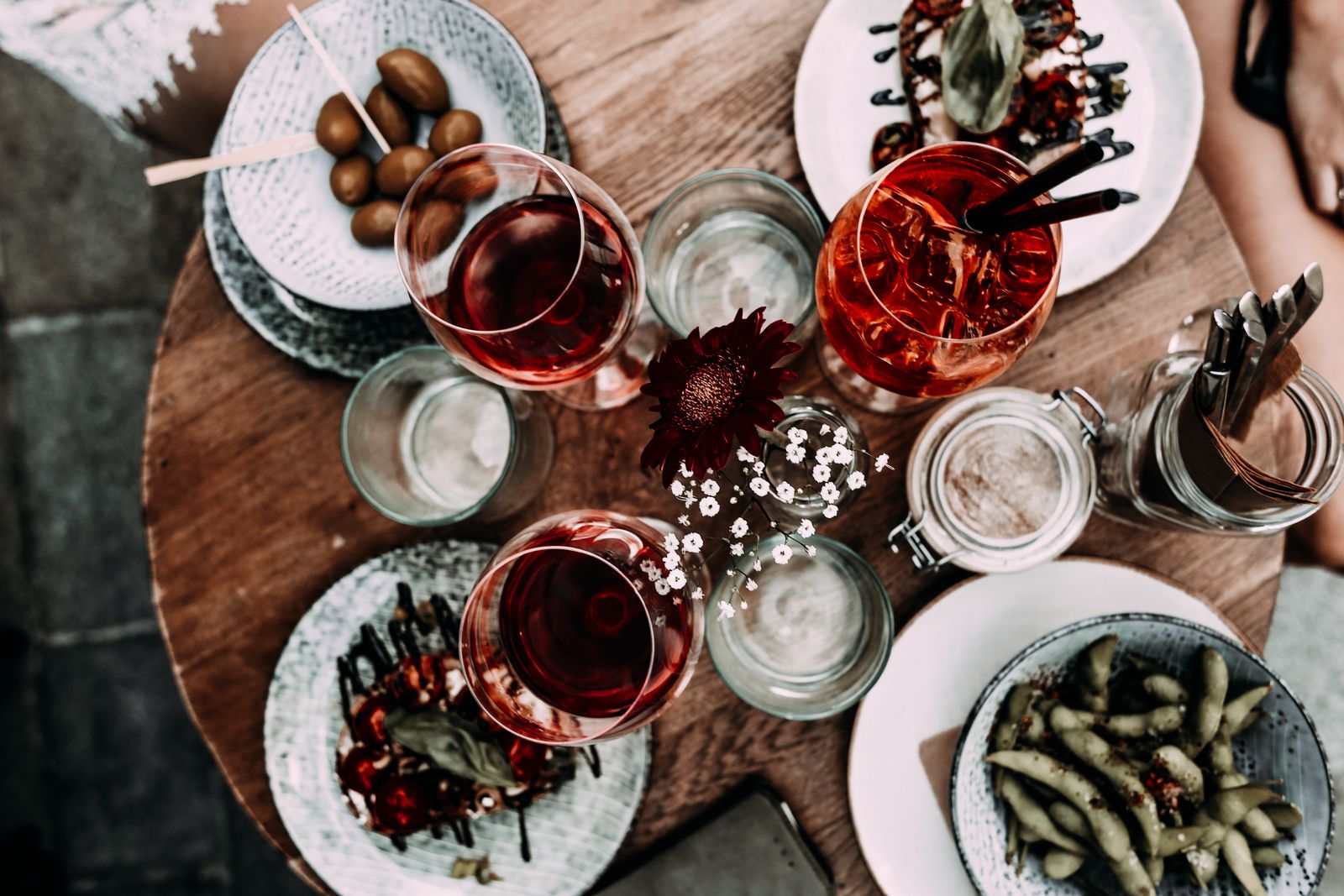
Somewhere around seven, the light turns amber and the day changes register. Work is finished, or finished enough to abandon. Dinner is still an hour off. And into that narrow seam between the labour of the day and the pleasure of the evening, the Italians long ago slipped something close to genius: a cold glass, a dish of olives, a half-hour with no function but to mark the turning. The aperitivo. Not a meal, not quite a drink — a piece of punctuation in the long sentence of a day.
We tend to mistake it for the spritz. We photograph the spritz, order it by the carafe, carry the memory home and try to rebuild it on a Tuesday balcony, and wonder why it tastes of so little. But the spritz was always beside the point. What the Italians grasped, and what we keep mislaying, is that the ritual is the luxury and the Campari is merely its excuse — a frame built around an hour, and a quiet insistence that the end of a day deserves to be noticed before it is simply used up.
The drink was never the point. The aperitivo is a frame built around an hour.
The Art of the Pause
Most of us end a day badly — sliding without seam from the last message into the first chore, dinner assembled standing at the counter, the evening half gone before we register that it began. The aperitivo interrupts the slide. It draws a deliberate line across the day and says: before the next thing, this thing, and this thing is for nothing at all. An hour that produces no outcome. A pleasure that yields only itself.
The word descends from the Latin aperire — to open. It opens the appetite, certainly; but it opens something larger too, a clearing in the day that the day did not schedule. We have grown so fluent in usefulness that we have half-forgotten the older discipline of the pause: the true stop, the sitting down for no reason, the refusal to make every hour pay its way. The aperitivo is a rehearsal of that discipline, performed nightly — a small, civilised argument that one is permitted, simply, to halt.
A Small Theatre
Watch a proper aperitivo and you notice it is staged. The bottles come out. The good glasses, not the everyday ones. Olives go into their own dish; the crisps are tipped into a bowl and never left in the bag. None of it is necessary and all of it is the point — the laying-out, the pouring, the small arrangement is the precise alchemy that turns a drink into an occasion and an unremarkable Tuesday into something one might almost dress for.
And this is the part that travels, long after the southern light has gone. You need no piazza. You need only the willingness to make a small ceremony of the ordinary — the good glasses on a weeknight, a little table set on a balcony the size of a doormat, the hour before dinner treated as something to be hosted rather than merely survived. The Romans laid their tables in the open air for the same reason we set ours by a kitchen window: the wine was only ever the occasion, never the cause.
Elegance is rarely about the setting. It is about the attention you are willing to pay.
The Hour You Can Keep
There is one more thing to be said for the aperitivo, and it is the best of them: alone among the pleasures of an Italian summer, it asks for nothing you cannot carry home. The villa is rented by the fortnight. The view belongs to the season and stays behind when you go. But the hour — that deliberate, gilded, gloriously useless hour before dinner — packs flat and travels free. It survives the flight, and the grey arrival, and the long middle of February, because it was never made of the spritz or the heat or the sea. It was made of a decision.
So tonight, wherever you are and whatever the weather is doing, pour something cold into a glass that deserves it. Set out a few olives in a dish that is theirs alone. Sit down with no task waiting in the wings, and let the light go amber and the day turn over, the way it has turned over every evening since long before anyone thought to give the hour a name. The Italians did not invent the evening. They only worked out how to meet it properly — and that is a small, portable art, and it keeps.