
There is a particular kind of woman who does not pack. She edits. She knows that what she carries onto a plane will become the architecture of her arrival — the difference between stepping off the aircraft frayed at the edges, and stepping off composed, rested, ready for the city waiting on the other side.
This is the edit for her. For the long-haul flight and the overnight train. For the moment between the boarding gate and the hotel lobby — the in-between hours that most travelers waste, and that the considered woman quietly turns into the most beautiful part of the journey.
It begins, always, with the suitcase. With what you choose to bring, and what you choose to leave behind. With the small objects that make all the difference: the cashmere wrap that becomes a blanket and then a shawl. The packing cubes that turn chaos into intention. The cable organizer that means you never arrive somewhere new searching for the charger you forgot to coil neatly the night before.
These are the pieces — the suitcase, the bag, the cubes, the cashmere, the small luxuries — that travel quietly alongside her. Each one earned its place. Each one stays.
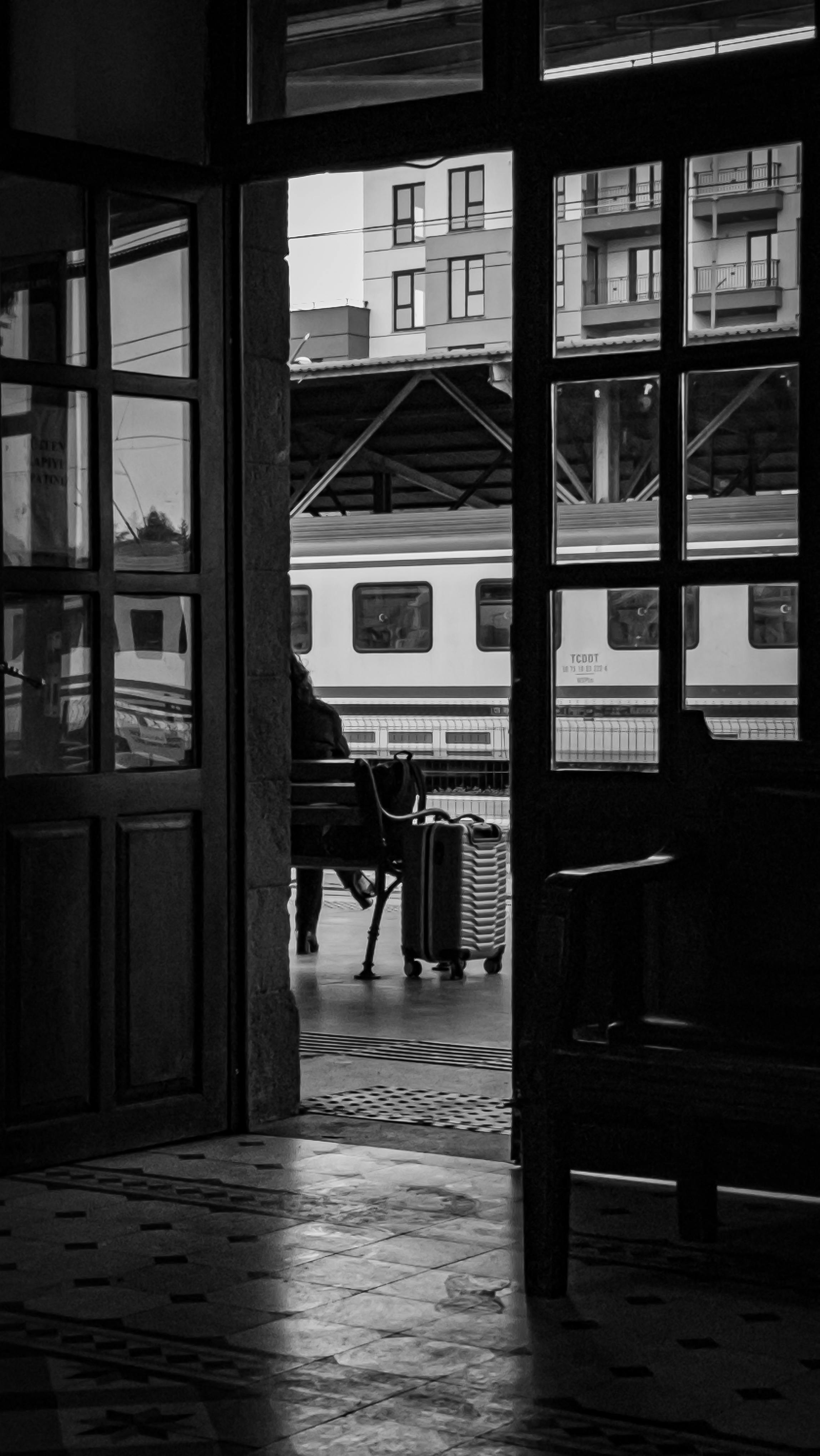
The departure has always been the most cinematic part of the journey.
The Suitcase
The suitcase is the foundation. It is the piece you will roll across marble lobbies and cobblestone streets, lift into overhead bins and place beside hotel beds. It will be photographed without your knowing. It will outlast most of what is inside it.
Choose well. Choose once.
Two suitcases earn the right to your trust — the carry-on you'll never check, and the slightly larger companion for the longer stays. Both editions, both considered. Both built to travel beside you for years rather than seasons.
The everyday edition
The piece that handles weekends, short city stays, the carry-on you reach for again and again.
Shop the suitcaseThe longer journey
For the trips that ask for a week or more — the considered upgrade for the woman who travels often.
Shop the suitcaseThe Bag She Carries On
The carry-on tote is not luggage. It is hand-held architecture. It holds the laptop, the magazine, the cashmere, the passport, the small leather wallet, the silk-lined pouch with the lipstick and the hand cream and the eye drops. It is what stays with her at the gate while the larger suitcase travels below.
The best ones are structured enough to stand up on the floor of the hotel room, soft enough to mold beneath the seat in front of her, and beautiful enough to photograph on the bed once she arrives.

The hour before the flight — the quiet inventory of what comes with her.
The everyday carry
Structured, soft-lined, with room for the laptop and the small luxuries.
Shop the toteThe second option
Same intent, different silhouette. For the woman who likes to alternate.
Shop the toteShe edits." — ESVRA
The Packing Ritual
What happens inside the suitcase matters as much as the suitcase itself. The considered woman does not throw her clothes into a bag the night before and hope. She folds. She rolls. She layers. She uses cubes — those small, quiet rectangles of canvas that turn a suitcase into a wardrobe.
Packing cubes are the unsexy revelation of modern travel. Once you use them, you cannot unsee them. They organize by category — knits in one, linen in another, swimwear in the third. They prevent the rummage. They keep the silk shirt from creasing into ruin. And when you arrive, you do not unpack. You simply place the cubes in the hotel drawer, and your wardrobe is, suddenly, already there.
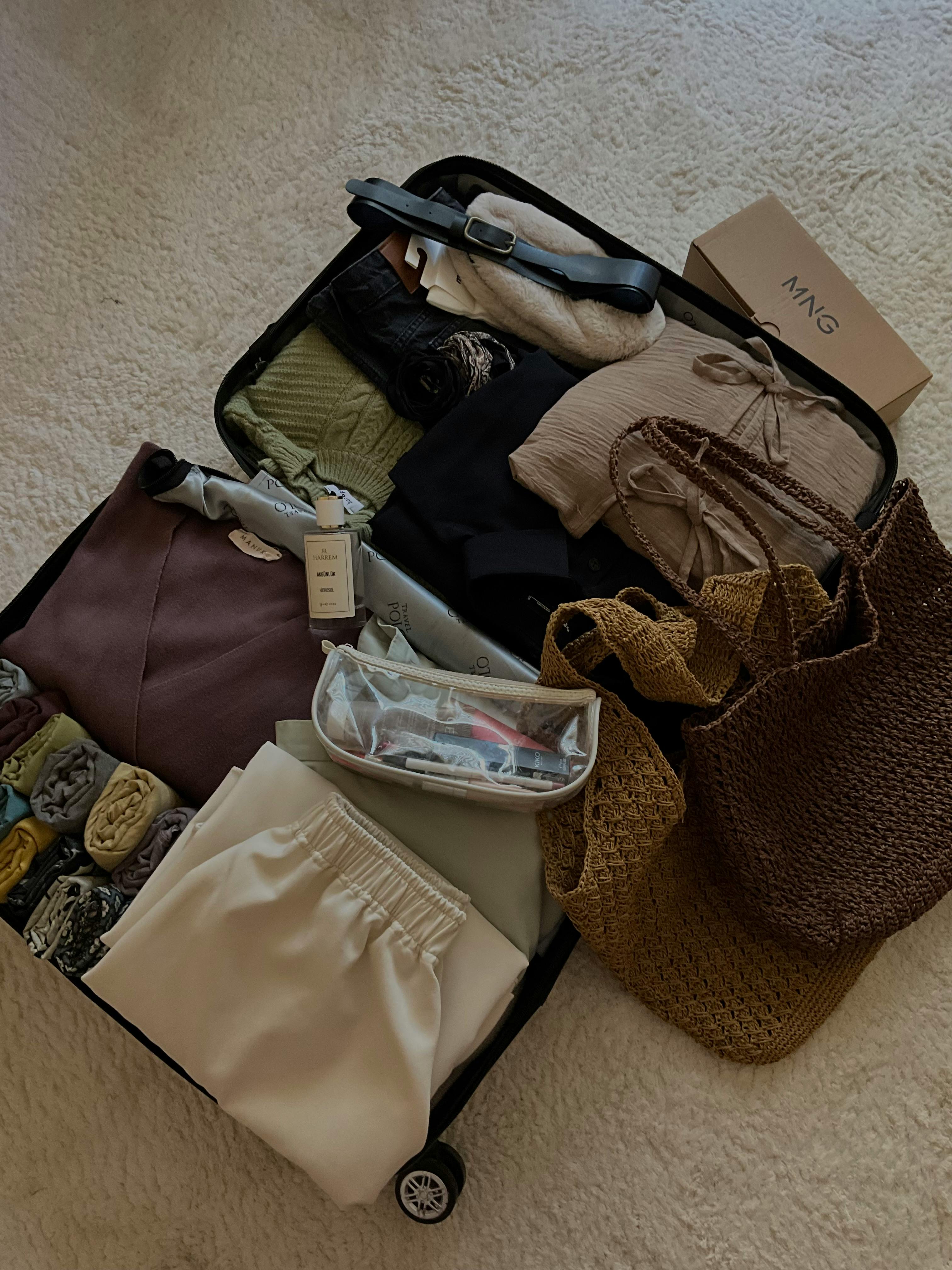
The interior of the considered suitcase — folded, cubed, ready.
The everyday set
Lightweight, breathable, the set she uses for nearly every trip.
Shop the cubesThe considered edition
A slightly more elevated version — quieter colors, finer canvas.
Shop the cubesThe Travel Beauty Edit
Beauty travels in two places — the case that lives inside the suitcase, and the case that travels in her hand. One is for the long shower routine, the slow morning ritual after arrival. The other is for the flight itself: the hand cream applied at 30,000 feet, the lip balm, the discreet refresh before the descent.
The considered traveler invests in two pieces here. A makeup organizer for the suitcase — soft-sided, partitioned, the kind that unfolds and lays everything flat. And a vanity case for in-flight — small, hand-luggage friendly, sturdy enough to protect the fragile glass, the serum, the perfume vial she will not travel without.
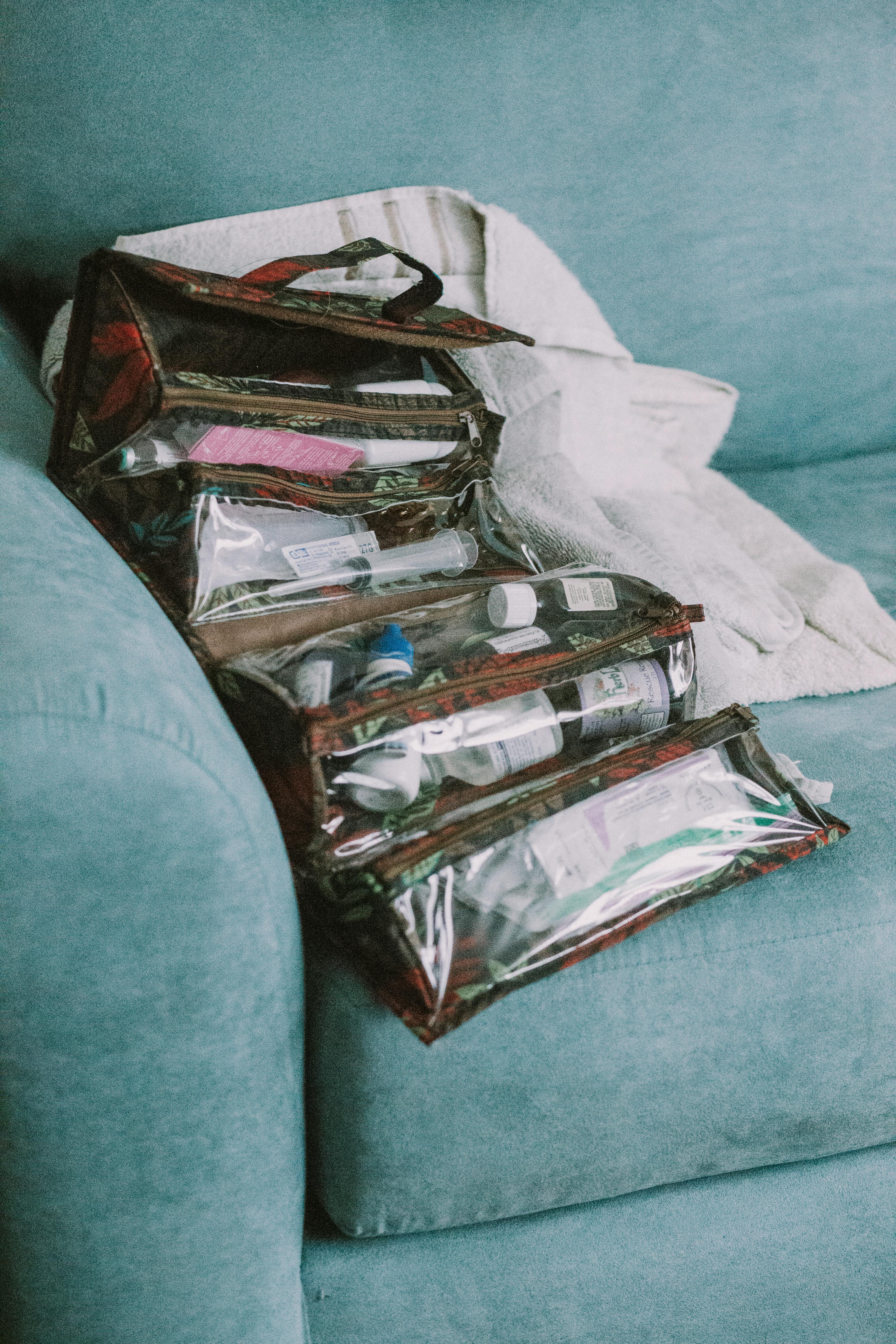
The beauty edit unfolds.
The makeup organizer
Soft-sided, partitioned, the one that holds the full routine.
Shop the organizerThe vanity case
Carry-on friendly, structured, the small luxury that travels in her hand.
Shop the vanity caseThe Cashmere Hour
This is where the long-haul flight is either survived or transcended. The cabin lights dim. The meal service ends. The traveler beside you reclines into something resembling sleep, and the question becomes: what do you reach for next?
Cashmere. Always cashmere.
A travel blanket is the difference between landing in Paris with sleep in your eyes and the kind of full-body chill that takes hours to shake — and landing softened, rested, ready. The right one is large enough to cover both legs and the shoulders, light enough to fold into the tote, beautiful enough that you'll happily use it at home between trips. The cashmere wrap is the more elegant variation of the same idea: it travels as a scarf around the shoulders, becomes a blanket mid-flight, and steps off the plane wrapped around her arm like an accessory.
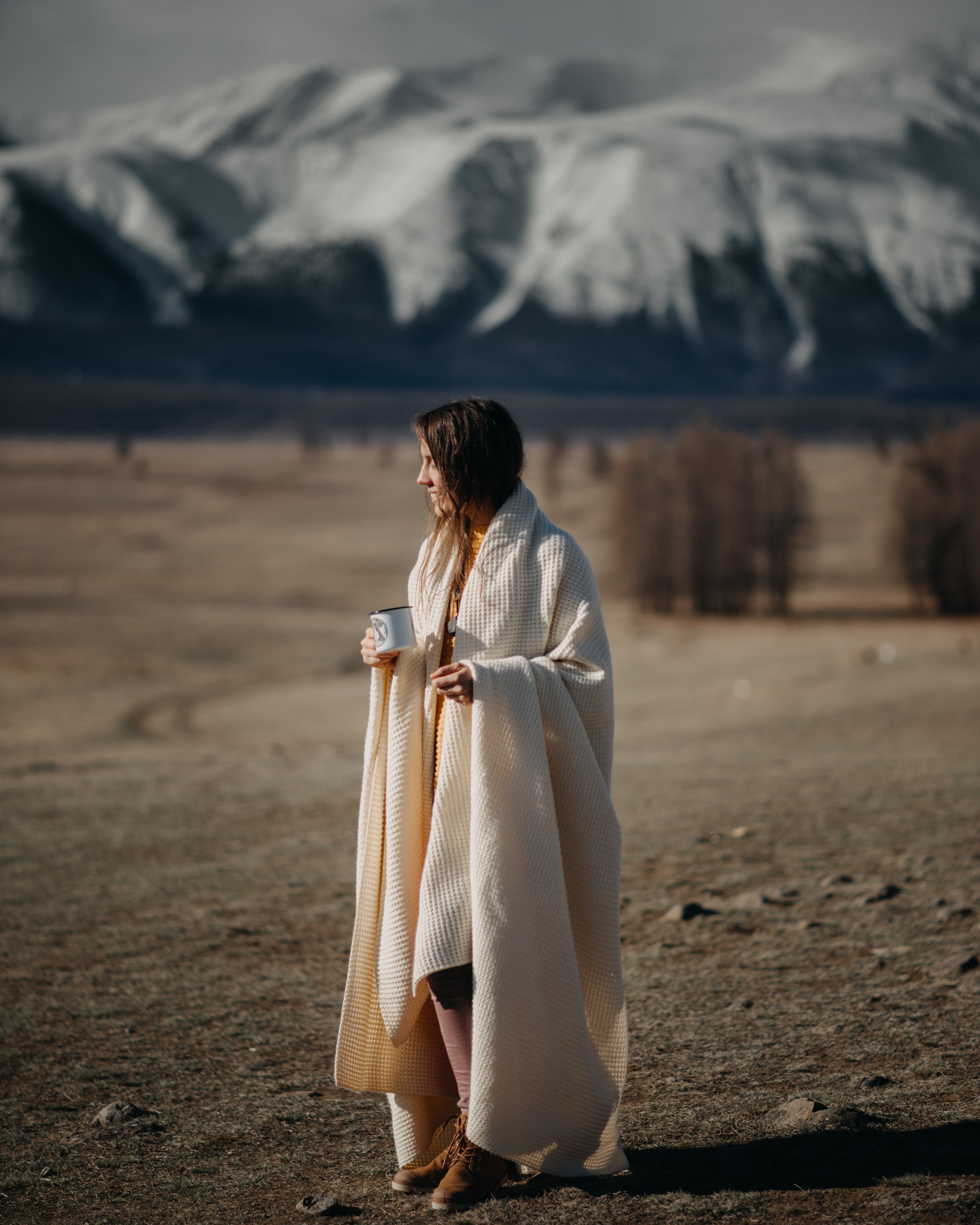
The cashmere hour — the most considered part of any flight.
The cashmere companion
Worn as a scarf at the gate, opened as a blanket above the clouds, draped around the shoulders on arrival. The most considered piece in the entire edit.
Shop the wrapThe everyday version
The blanket she folds into the tote. The one she reaches for on every flight.
Shop the blanketThe second option
Slightly different weight, slightly different palette. Two perfect editions.
Shop the blanketThe Quietly Essential
The unsexy section. The pieces no one photographs on Pinterest, but that the seasoned traveler refuses to fly without. A working charger. A cable organizer that keeps the headphones, the lightning cable, the spare cord from becoming the impossible tangle at the bottom of the bag.
These are not glamorous objects. But they are the difference between a smooth arrival and the small, hot moment of frustration in the hotel room when you realize you cannot find the charger. The considered traveler does not allow that moment. She invests, once, in pieces that prevent it.
The one that travels
Compact, multi-device, the charger she packs without thinking.
Shop the chargerThe cord organizer
Small, leather-lined, the piece that prevents every cable knot.
Shop the organizer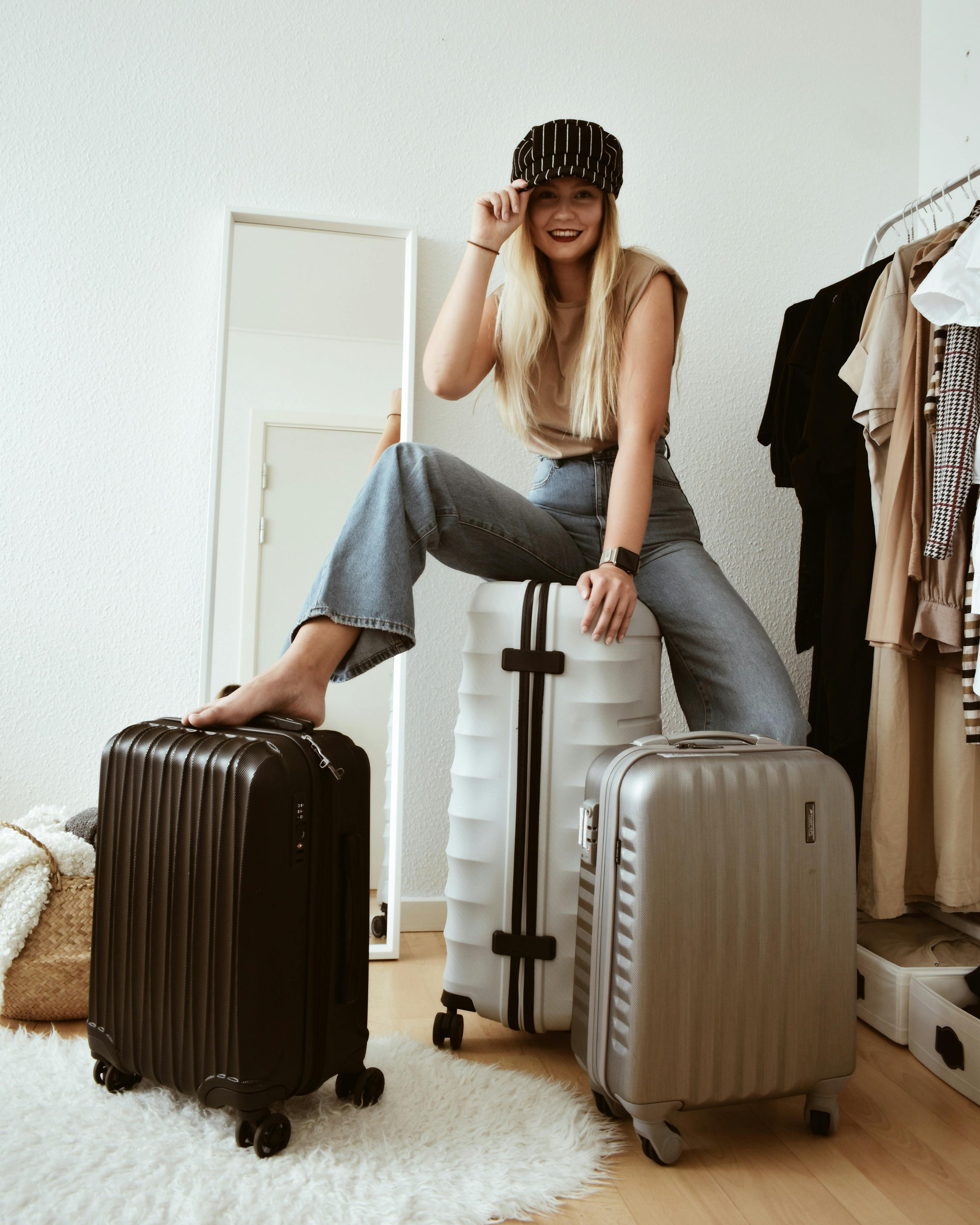
The wait between flights — the most underrated hour of any trip.
The Closing Thought
The truth about travel — the considered version of it, at least — is that none of it has very much to do with the destination. The destination is the reason. But the way she gets there, the small rituals she builds around the long-haul flight, the cashmere she pulls from her tote when the cabin lights dim — these are what turn a trip into a memory rather than a delay.
This is the edit, then. The suitcases that travel beside her. The bag she carries onto the plane. The cubes that turn a wardrobe portable. The cashmere that softens every hour. The small objects — the charger, the cables, the organizers — that prevent the frustrations no one writes about but everyone has lived through.
She does not pack. She edits.
And then, with everything in its place, she flies.