There is a particular exhale that happens about forty minutes outside the city — when the buildings have thinned to fields, the road has narrowed, and the radio has been switched off because the silence is suddenly preferable. The shoulders drop. The jaw unclenches. Something that has been held tight all week, without your quite noticing, begins to loosen. You are going to the country for the weekend, and the weekend has, in truth, already begun: it began the moment the city fell away in the mirror.
The country weekend is one of the oldest luxuries there is, and one of the most quietly perfect. It asks for so little — a house that is not your own, two days, a bag packed without much thought — and it gives back so much. Not excitement, exactly. Not novelty. Something better and rarer: restoration. The country weekend is where a person goes to remember what they are like when they are not being hurried, measured, or required. It is the great reset, conducted at the pace of a slow walk and a long sleep.
The Lived-In House
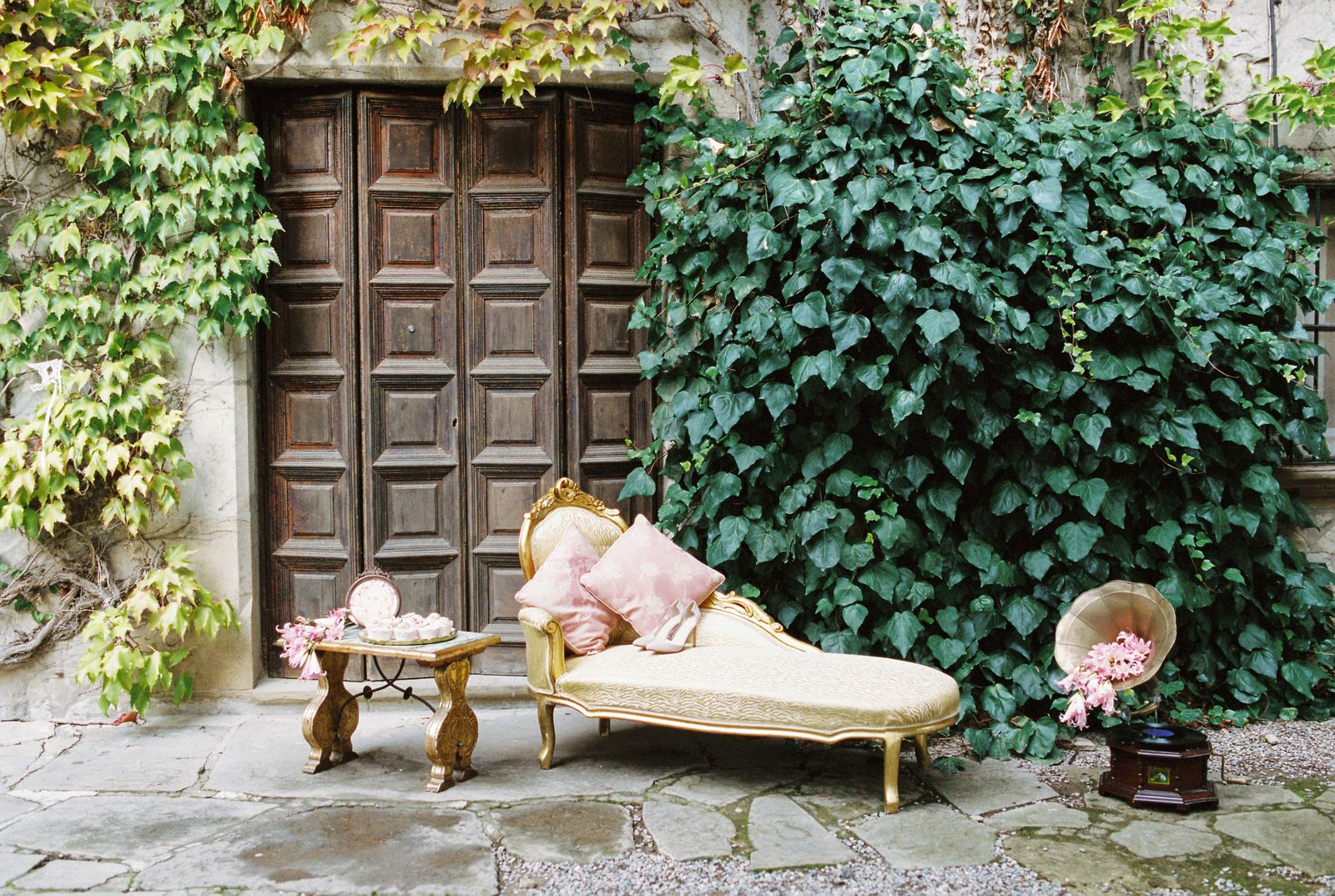
The best country houses are never showpieces. They are lived-in — a little worn, a little mismatched, full of the comfortable evidence of other people's other weekends. Books swollen from being read in the bath. A record player and a stack of records chosen by someone with no intention of impressing anyone. Deep chairs that have given up their shape to decades of bodies. Quilts. Odd china. A kitchen that smells faintly of woodsmoke and coffee. There is nothing aspirational about such a house, and that is exactly its magic: it does not ask to be admired, only to be inhabited.
This is the opposite of the curated hotel, and there is a place for both. But the lived-in country house offers something a hotel never can — the sense of borrowing, briefly, a whole other life. For two days you are not a guest being served; you are a person living somewhere slower and softer, making your own coffee in an unfamiliar kitchen, learning which floorboards creak. It is the same instinct, in the end, that draws us back to the places we love — the subject of why we return to the same places — the deep human pleasure of belonging somewhere, even temporarily, rather than merely visiting it.
The weekend had already begun: it began the moment the city fell away in the mirror.
The Shape of Two Slow Days
A country weekend has no itinerary, and that is the entire point. The mornings are long and slow — coffee taken outside if the weather allows, the newspaper or a book, no particular plan beyond perhaps a walk. The afternoons drift: a market, a nap, a swim in cold water if there is water, a lunch that runs into the evening. The nights are early and deep, the kind of sleep that only seems to come away from home, under a window left open to the sound of nothing at all. You do less in two country days than you do in a single city morning, and you return more yourself than you have felt in weeks.
What makes it restorative is not the doing but the not-doing — the permission, granted by distance, to simply stop. In the country there is no one to perform for and nothing that cannot wait. The phone loses its signal and, gradually, its grip. The to-do list, left behind on the kitchen counter at home, turns out not to have been urgent after all. And in the space that opens up, something quietly returns: the capacity for boredom, for daydreaming, for noticing the light — all the small faculties the city slowly wears away.
The Return
You pack the car on Sunday evening with a particular reluctance, and the city receives you again with its noise and its demands. But something has changed, even if only for a few days. You drive back slower than you drove out. You carry a little of the country's quiet with you — a looseness in the shoulders, a clarity behind the eyes, the memory of a morning when you had nowhere to be. That, in the end, is what the weekend was for. Not to see anything in particular. Simply to remember how it feels to be unhurried, and to bring a little of that feeling home.
So go, when you can. Borrow the lived-in house. Pack the bag without overthinking it. Switch off the radio when the fields begin. The country will do the rest — slowly, quietly, and exactly as it always has.
Leave the city. Take the slow road. Let the country do the rest.