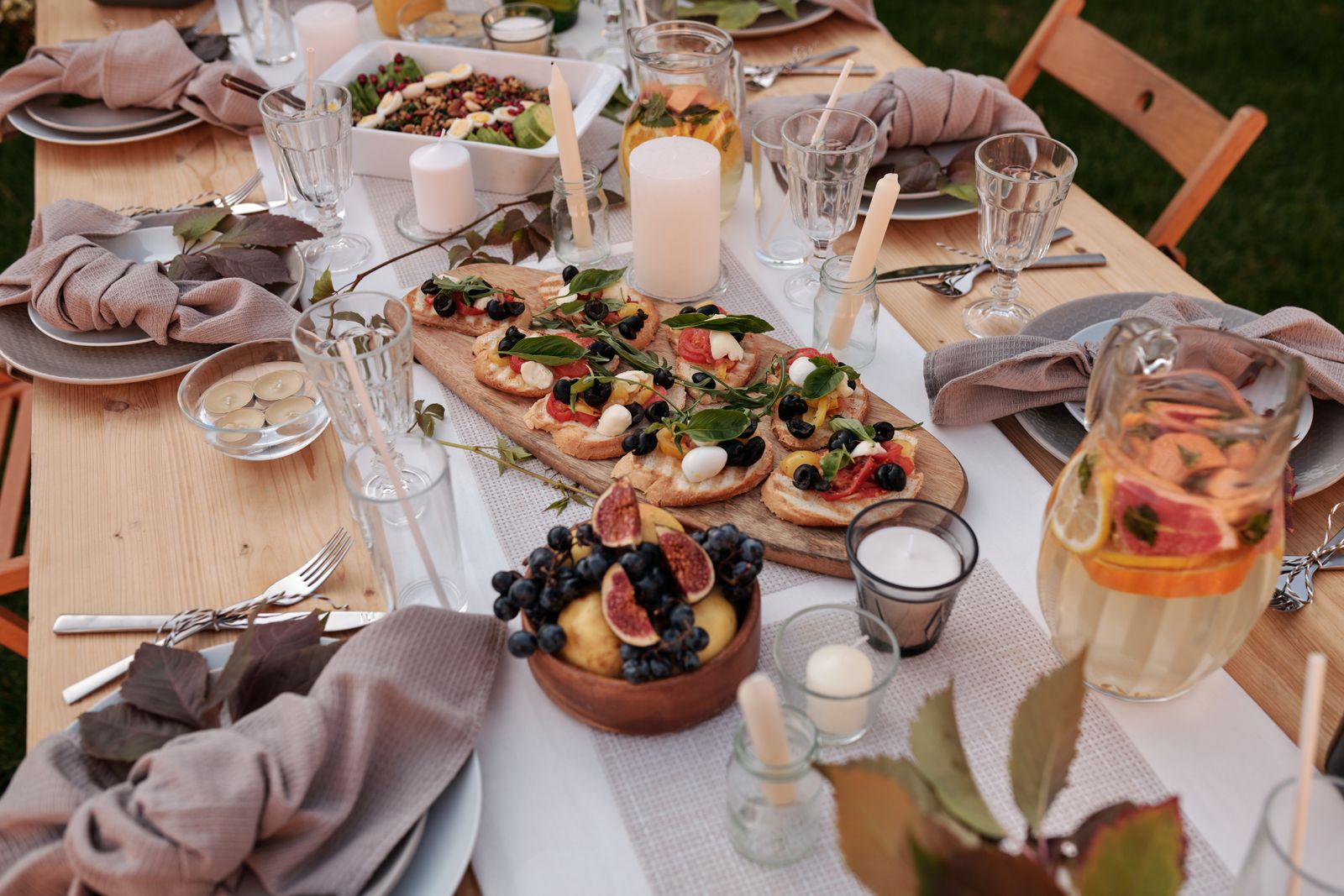
Somewhere on the Mediterranean, at this very moment, a lunch that began at one o'clock is still unfolding. The plates have been cleared and replaced and cleared again. The first bottle became a second without anyone quite deciding it should. The conversation has wandered from gossip to politics to something almost philosophical and back to gossip again. No one has looked at a phone. No one has mentioned leaving. The afternoon, which began with such promise of productivity, has dissolved entirely into pleasure — and this, the people at that table understand, is not a failure of the day. It is the whole point of it.
The long lunch is among the most civilised things a person can do, and among the most quietly radical. In a culture that treats the midday meal as an inconvenience to be dispatched in fifteen minutes over a keyboard, the decision to sit down at a table and stay there — for hours, with no agenda but the company and the food and the slow tilt of the afternoon light — is almost a form of rebellion. It says: this, right now, is more important than whatever I was meant to be doing. And it is almost always right.
The Architecture of an Afternoon
A long lunch has a shape, though it is never planned. It begins briskly enough — an aperitivo, something cold and a little bitter, a bowl of olives, the first easy talk. Then the food arrives, and the pace changes. There is no rush to the next course because there is no next thing to rush to. Plates are shared, passed, returned to. Bread is torn. Wine is poured without ceremony. And somewhere in the second hour, the afternoon undergoes its quiet transformation: time, which usually marches, begins instead to pool. You stop checking it. You forget, for a while, that it exists.
This is the great gift of the long lunch, and it cannot be hurried into being. It is the opposite of efficiency, and that is precisely its value. We have written before about the art of slowness — and there is no purer expression of it than a table of people who have decided, collectively and without saying so, that they are in no hurry to be anywhere else. The long lunch is slowness made social. It is leisure with witnesses.
The afternoon dissolved entirely into pleasure — and this is not a failure of the day. It is the whole point of it.
What the Table Asks of Us
To host or attend a long lunch well requires very little, and yet it is the little that matters. A table somewhere pleasant — a garden, a terrace, a cool room with the windows open. Food that can sit, that improves with waiting, that does not demand to be eaten the instant it is ready: a roast chicken, a great bowl of something, ripe tomatoes, good bread, cheese to end on. Wine, of course, and water, and the understanding among everyone present that no one will glance at the time. The long lunch is not about luxury in the material sense. It asks for nothing expensive. What it asks for is rarer: the willingness to give an afternoon away.
And that, for most of us, is the hard part. We are so trained to account for our hours — to make each one productive, to feel the low hum of guilt when we are merely enjoying ourselves — that to surrender a whole afternoon to a table feels almost transgressive. But the people who live most beautifully have made their peace with this. They know that the long lunch is not time lost. It is time spent on the only things that ever really mattered: good food, good wine, and the people you would happily lose an afternoon to.
An Invitation
You do not need the Mediterranean for this, though it helps. You need only a free Saturday, a few people you love, a table you are willing to sit at for longer than is sensible, and the discipline — for it is a discipline — to let the afternoon go where it wishes. Cook something that can wait. Open the good bottle early. Put the phone in another room. And then simply stay, and keep staying, until the light has moved across the table and someone has told the story they always tell and the candles, somehow, have been lit.
The afternoon will dissolve. The emails will keep. And you will have done one of the most luxurious things available to a human being — which is, simply, to have been entirely present at a beautiful table, for no reason other than the pleasure of it, for as long as the pleasure lasted.
Sit down. Pour the wine. Let the afternoon dissolve.