Styling · The Animal Print
The Fall Animal
The print is the extra statement, not the outfit. One skin — and everything else stays plain.
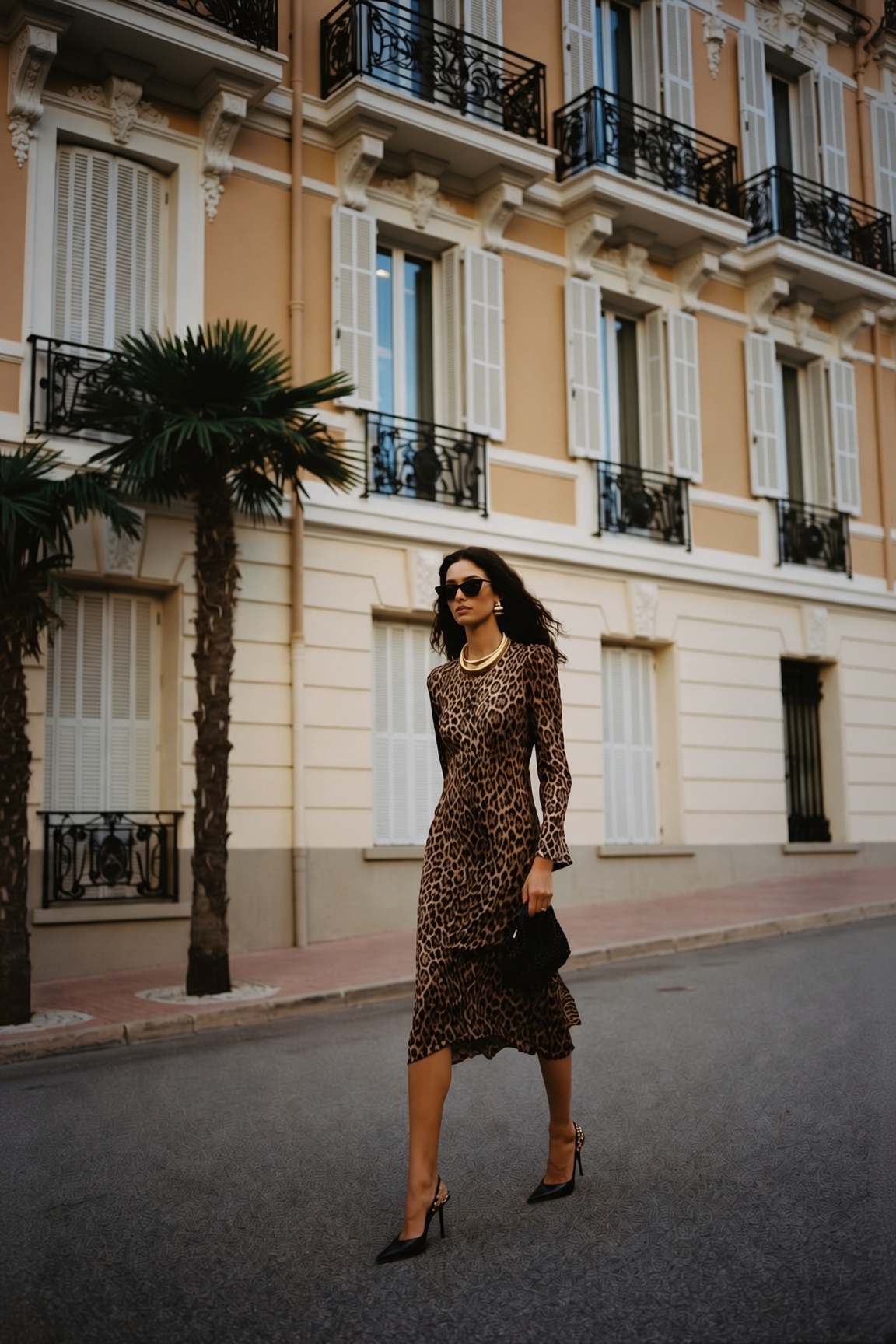
The print is the extra statement, not the outfit. One skin — and everything else stays plain.
The rule everyone repeats is that leopard is a neutral. It is not. A neutral is a colour that disappears; leopard is a pattern that arrives before you do. What people mean is that it goes with everything — which is true, and which is exactly why it fails so often. If it goes with everything, you end up wearing it with everything.
This season the houses made the case differently. At Marni, Meryll Rogge cut cowhide coats and put animal print on bags and shoes in small doses, against unexpected colours, so the print was an extra statement rather than the outfit. Prada went further and made it almost invisible — a cheetah-trimmed parka, snakeskin bags, the pattern used as edging. Fendi did the opposite: full tiger coats and vests, loud, with tiger-printed Baguettes as the quieter half of the same idea. And Kim Shui sent tiger-trimmed coats, leopard pencil skirts and tiger minis down a boat runway with no interest at all in restraint. Four houses, four positions, one print.
It has always carried this much. Dior put a leopard silk chiffon dress in the 1947 New Look, and Jackie Kennedy wore a leopard coat through the fifties — and in the same decades the print was called cheap by people who owned none of it. Jo Weldon, who wrote its history, puts it plainly: it held both meanings at once, depending on who was wearing it.
Which is the whole instruction. The print has never been the risk. The risk is the second one. A leopard coat over a leopard dress with a snake bag is not commitment, it is noise, and it is the fastest way to make four thousand pounds of clothing look like a costume shop.
So: one skin. A plain shoe, or a printed shoe and nothing else printed. Black or brown underneath, never both patterns in one frame. If the outfit reads as one strong idea and four quiet ones, it is working.
This is not an edit for anyone who wants to look wild. It is for the woman who wants one loud thing and the confidence to leave the rest alone — the dress, the coat, the bag, the snake, the zebra and the boot.
Mine is the Alaïa leopard jacquard minidress and a black heel. One skin, and I do not add a second.— K.W., Editor-in-Chief
The leopard blazer or the cardigan over black. A plain leather bag. Nothing else patterned anywhere.
One printed dress, a black heel, one gold thing at the ear. The dress is already the jewellery.
Zebra with leopard. It only works when one is black and white and the other is brown — and only if one of them is a shoe.
Where the trend actually lives. Valentino, Dolce & Gabbana, Saint Laurent, Alaïa, Alex Perry and Isabel Marant.
Lamé and embroidery on a print that is already loud. The most expensive thing here, and the one that needs the least styling.
Ruching does the work a body-con cut cannot. The house has sold this shape for thirty years because it holds.
Mesh, so the print sits on skin rather than over it. Sharp rather than sweet — the house’s whole argument with the print.
Jacquard, not print — the pattern is woven in. It moves like a knit and holds the body without gripping it.
Full length, and the print does the decoration so nothing else has to. A gown that needs one earring and a flat shoe.
Wool, which is what makes it a fall piece rather than a holiday one. Loose enough that the print reads as cloth, not costume.
The easiest way in. Short, unfussy, and cut so the print is the only thing happening.
Sequins and leopard should be too much. At midi length, with a black shoe, it is not.
The piece that carries the trend without committing the whole outfit to it. Valentino, Givenchy, Alaïa and Dolce & Gabbana.
Cloth rather than fur or hair, which is why it reads as tailoring first and print second. The investment of the edit.
The cocoon line keeps the volume off the body. Jacquard again — woven, so it does not flatten in daylight.
Taffeta gives it a rustle and a shape a cotton trench never has. Belted, so the print follows the waist.
A blazer is the most useful animal piece you can own. Over a plain black dress, it is the entire outfit.
Deer rather than cat — softer, smaller, less obvious. Leather keeps it from reading as fancy dress.
The quieter price in the group, and the only faux fur. Wear it with everything else plain and dark.
Tap any piece below to shop the whole edit.

Calf hair rather than print — the texture is the point. Saint Laurent, Miu Miu, Prada, Givenchy and Nili Lotan.
A tote you can actually carry, in the material that makes the print look expensive rather than printed.
Small, on the shoulder, and the hair catches light the way a flat print never does.
The house took the minimal route with animal this season. This is that thinking in a bag — shape first, print second.
The Voyou’s slouch suits the print. Soft, unstructured, and it does not announce the house.
The quietest bag here and the most useful. Leather, not hair, so it survives an actual week.
The skin that replaced leopard for anyone who already owns leopard. Oscar de la Renta, Khaite, Amina Muaddi, Christopher Esber and Gabriela Hearst.
Faille holds a shape the way silk will not. Snake on a structured dress reads as pattern, not reptile.
The house does snake better than anyone right now — embossed, not printed, so the texture is real.
The smaller of the two. If you want one snake thing and nothing else, make it this.
Snake on the foot is the least demanding version of the trend. It reads as texture from any distance.
The heel is the house signature; the skin is the season. Under a plain black trouser, it is the only thing you see.
Draped, so the print moves rather than sits. The most modern dress in the edit.
A cardigan is where a print stops being an event. Wool, buttoned, over a plain shirt.
Denim under the print keeps it honest. The quieter price of the group and the easiest to wear on a Tuesday.
The graphic skins — black and white, no warmth, nothing to match. Khaite, Bottega Veneta, Toteme and Blumarine.
The largest statement in the edit. Black and white means it fights nothing, which is the trick of zebra.
A shirt, so it goes under a coat and disappears until it does not. Crepe keeps it soft.
Cow hair, cut large and plain. The house does not do decoration, so the print has to earn its place.
Asymmetric and chiffon, which is the loudest thing here. It works because zebra has no colour to argue with.
Where the print does the most work for the least commitment. Alaïa, Herbert Levine, Prada and Gianvito Rossi.
Over the knee and covered in hair, so nothing above them can compete. A dress, these, and nothing else.
A revived house doing the thing it was known for. Knee height is the more wearable of the two.
Backless, flat at the front, and the print sits where a shoe usually says nothing.
Suede softens the print into something you can wear to work. The quietest way into the trend.
Every piece in this edit, by the houses behind it. Explore them all.
The print has survived every era that declared it finished, which is not an accident. One skin, worn like you meant it, and nothing else in the frame asking for a turn.— ESVRA