Fashion · The Fall Edit
Effortless, Not Expensive
Fall, cut properly, under five hundred. A trench worn open. A jean with a waist. A shirt that holds its collar.
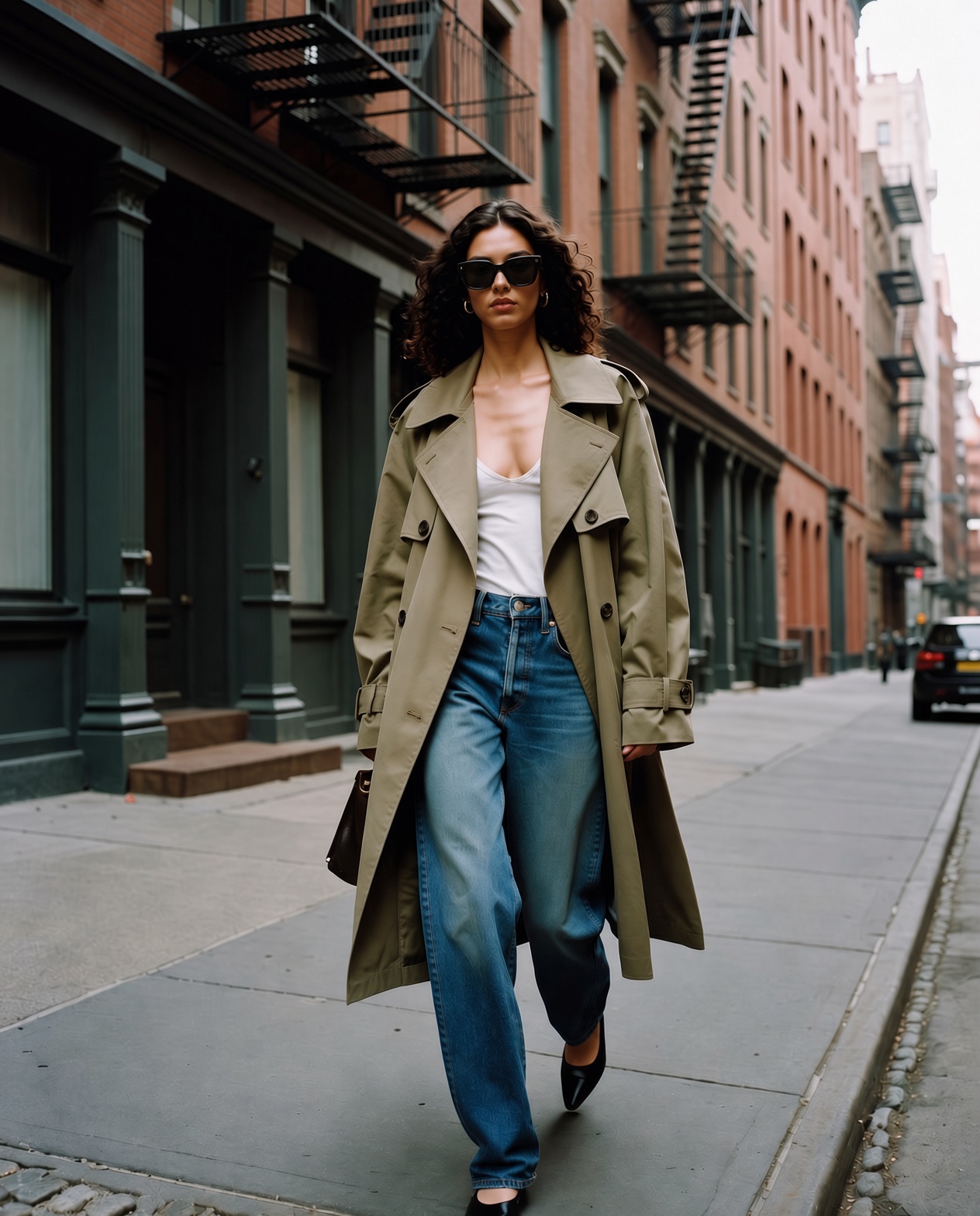
Fall, cut properly, under five hundred. A trench worn open. A jean with a waist. A shirt that holds its collar.
ESVRA has always been about the line of a thing, not the number on it. This is the same wardrobe we publish at every price — The Frankie Shop, Matteau, Comme Si, Citizens of Humanity, Dries Van Noten, Jenni Kayne, DÔEN — in the pieces that do not need a waiting list to look finished.
Buy one. Wear it against what you already own. That is the whole chic of it.
What I would put on in October:
The trenchThe Frankie Shop Stan Cropped$485
The wide-legJamie Haller Baggy Wide-leg$460
The straight legCitizens of Humanity Brynn Trouser$298
The silk shirtComme Si Notched Collar Silk$425
The poloAimé Leon Dore Ribbed Polo Sweater in red$395
The blazerThe Frankie Shop Bea$345
The midiMatteau gathered poplin midi$460
The knit poloJenni Kayne Frances cashmere polo$475
— K.W., Editor-in-Chief
Every piece here is under five hundred. Tap any one to shop it.

Trench open, wide-leg or trouser jean, shirt tucked once. The waist has to show.
The midi or the long jersey, cashmere over it until the table. One gold thing. Nothing at the throat.
Plain first. Decoration is a second purchase, not a first.
A matching set. And two loud collars in one outfit.
Start with the Frankie Shop Stan Cropped.
Open over volume. Cropped if the jean is wide; long if it is not.
Cropped, so it ends above the widest part of a wide trouser. The one to buy if you own a long trench already.
Gabardine, belted, worn open. The long trench on this page.
The check does the work of a pattern without being one. Everything under it stays plain.
A mock neck instead of lapels — it reads as a coat rather than a trench, which is why it looks newer.
Start with the Jamie Haller.
Full leg, long hem, a flat underneath. This is the fall jean.
A seventies rise and a long line. It wants a flat and a tucked shirt.
Baggy through the thigh, straight to the hem. Over a flat.
Start with the Citizens Brynn.
The jean that reads as a trouser. Higher waist, cleaner line.
A trouser that happens to be denim. If you buy one jean, this is it.
Straight rather than baggy, high at the waist. The most tailored jean here.
Low-rise cargo. Not a straight-leg, and not the first jean you buy.
Start with the Comme Si La Classica.
A collar that stands. White, tucked, nothing clever.
Heavy poplin, a collar that does not collapse. That is a white shirt.
The same poplin with the neckline opened. It solves the problem of a shirt that sits too high.
Oversized without being a man’s shirt. The shoulder is cut for a woman.
A Danish house that has been cutting shirts for thirty years. Plain, and it wears in.
Start with the Comme Si notched collar.
The same idea, with drape. Open at the throat.
A notched collar is a tailoring detail on a silk shirt. That contradiction is why it works.
Silk that hangs rather than clings. Open at the throat, tucked once at the front.
Seersucker has texture built into the weave, so it never looks flat under a coat.
Chambray is softer than denim and reads as a shirt rather than a jacket.
Start with the Aimé Leon Dore ribbed polo in red.
The collar that came back. One in an outfit — the red knit, or nothing loud.
Knitted rather than jersey, so it holds a shoulder. Red, and nothing else in the outfit with an opinion.
A stripe and a colour at once. One loud collar in an outfit, never two — this or the rugby, not both.
A rugby stripe on cotton is the most nineties thing here. The other loud collar — pick one.
Satin rather than cotton, which turns a polo into something you can wear at night.
Start with the Frankie Shop Bea.
Soft shoulder, worn open. It is a layer, not a suit.
The blazer that made the house. Dropped shoulder, long body, worn open over everything.
Narrower than the Bea. Buy this one if the oversized shape swallows you.
Black, plain, unstructured. The one that goes over the black dress.
Wool voile is light enough to hang rather than stand. It moves like a shirt.
Start with the Matteau, or the Dries if you want the name.
Mid-calf. The length that works in daylight.
Poplin, gathered, mid-calf. The cleanest line here, and it will outlast the season.
Dries, mid-calf, no print. The name on this page that still looks like us.
Cotton poplin with a smocked bodice. A day dress that goes out at night with a heel.
A boat neck widens the shoulder and shortens the neck — which is exactly what a black dress needs.
The clean house dress. Jersey, a good neckline, nothing to fasten.
Start with the La Ligne crepe and chiffon. The LESET Margo is the door in.
Full length, no hardware. Evening without trying.
Crepe against chiffon, so the weight changes down the body. Full length, no decoration.
The back is the whole design. Nothing at the throat, nothing over it.
Start with the WARDROBE.NYC Racer.
Above the knee, a flat boot. Severe on purpose.
A racer back on a plain black dress. Severe, and it needs nothing added.
Start with the Éterne Francis.
The knit that disappears under a coat.
The house makes the plainest good knitwear in America. Nothing on it at all.
The same knit as above, in a second colour. Buy whichever you will wear with everything, not both.
A cashmere turtleneck that sits flat at the neck. Under a blazer, all autumn.
Start with the Jenni Kayne Frances.
A collar in cashmere, or a knit that falls.
A polo in cashmere. The neck sits under a blazer. This is the knit.
Cotton rather than wool, so it works in September. The blue is the reason to buy it.
The house that made the soft knit a category. Nothing scratchy, nothing structured.
Three fibres in one blend, which is why it drapes instead of holding a shape.
Every piece in this edit, by the houses behind it. The houses on this page.
The number was never the chic. The cut was. These are the ones you can act on.— ESVRA