Most Wanted · The Co-Ord
The Matching Set
Not a matched outfit — one garment in two parts. The decision was made before you woke up.
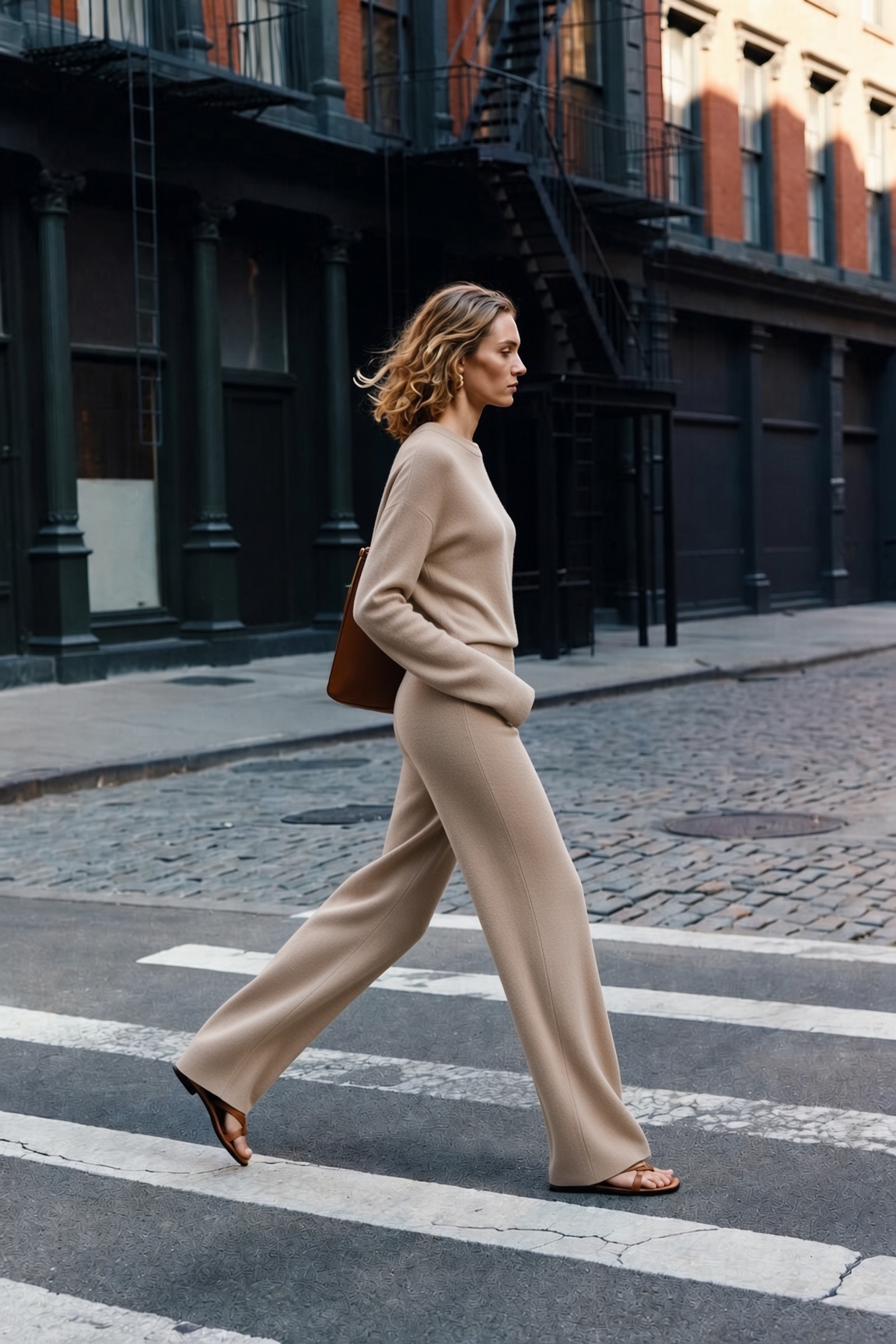
Not a matched outfit — one garment in two parts. The decision was made before you woke up.
The reason a set works is not that it matches. It is that somebody already made the decision. The top and the bottom were cut from the same cloth, in the same room, to be worn together — and every question you would normally answer at eight in the morning has been answered before you woke up.
That is a different thing from matching, and the distinction matters. Matching is what happens when you buy a jacket in one shop and hunt down something in the same cloth to go with it. That takes effort and it looks like effort. A set takes none and looks like none.
This season the houses made the case in soft cloth rather than tailoring. Loro Piana’s Banyan hoodie and its matching sweatpants are the reference — cotton and cashmere, no logo, no drawstring. Brunello Cucinelli ran lamé through an open knit and produced something closer to evening. Dries Van Noten cut jersey like trousers. Khaite and The Elder Statesman took the same logic somewhere dressier, in silk-blend knit and cashmere. And Olivia von Halle sells hers in one box, which is the most literal version of the argument.
Where it goes wrong is the fit. A set only reads as clothing if at least one half of it has a shape — a wide leg, a V-neck, a half-zip, a skirt. Two tapered, elasticated, drawstring pieces in the same colour is not a set, it is loungewear that left the house by mistake. The cloth can be as soft as you like. The cut cannot.
So: one shape somewhere. A real shoe, or a very good flat one. A leather bag rather than a soft one. And nothing else in the outfit doing anything at all — the set has already spoken.
This is not an edit for anyone dressing to be comfortable. It is for the woman who wants to be dressed in under a minute and still look like she thought about it — the cashmere, the knit, the silk and the velvet.
Mine is the Brunello Cucinelli lamé hoodie with its matching wide-leg pants. A leather sandal under it, and nothing else asking for a turn.— K.W., Editor-in-Chief
The cashmere set, a flat leather sandal, and a structured bag. The bag is what makes it an outfit.
The silk or the velvet, a heel, one gold earring. Nothing else, and nothing layered over it.
A knit set with a sharp leather shoe. Soft against hard is the entire trick.
The most expensive way to be comfortable. Brunello Cucinelli, Loro Piana, Dries Van Noten and Victoria Beckham.
Wide-leg, not tapered, which is the difference between a trouser and a jogger. Nothing at the ankle.
Lamé through an open knit. Evening in the shape of a hoodie.
The reference piece of this whole category. Cotton and cashmere, no logo, no drawstring, no argument.
The other half. Buy both or the point is lost — this is a set, not a separate.
Black jersey rather than beige cashmere. The version that reads as clothing rather than comfort.
Cut like trousers, made like sweatpants. The house has always been better at this than anyone.
A half-zip is the quietest neckline in the group. It goes under a coat without bulking at the throat.
The quieter price of the four houses here, and the one you will wear most.
Sweater and skirt, sweater and trouser — the set that leaves the house. Khaite, The Elder Statesman, Arch4, Guest In Residence and High Sport.
Silk in the blend is why it falls instead of clinging. A knit skirt lives or dies on that.
Open-knit. The sweater half of the most expensive set here.
The house makes cashmere for people who already own cashmere. The blue is the whole reason to buy it.
A V-neck keeps the set from reading as pyjamas. Small thing, entire difference.
Full length in cashmere is a risk that pays. Flat shoe, nothing else soft.
Layered construction, so it holds a shape a single-ply never would.
Linen in the blend gives it a dryness pure cashmere does not have. It wears into autumn rather than out of it.
A cardigan instead of a sweater, so the set opens. The easiest one here to break up and wear apart.
The house built its name on a knit that holds the body without gripping it. This is that, in a sweater.
The quietest price in the edit, and nothing about it says so.
Tap any piece below to shop the whole edit.

Where the set stops being soft and starts being dressed. Olivia von Halle, Comme Si, Ruohan, Reformation and Favorite Daughter.
Sold as one piece, in one box. The most literal answer to what a set is.
A notched collar is a tailoring detail on a silk shirt. That contradiction is why it works.
Silk twill holds a crease where satin never would. It reads as a trouser, not as nightwear.
Brown satin instead of black or cream. The colour is doing the work.
Wide enough to move, narrow enough to be a trouser. With a flat sandal, it is a whole evening.
Under four hundred for both halves, and it does not look it. The way in for anyone testing the idea.
A stripe on a set is a risk. It works here because the crepe is matte and the stripe is fine.
The cheapest thing in the edit and one of the most useful. Buy it with the shirt or without.
The one that only works in the evening. Chloé and Sanderlak.
Brown velvet is a strange, good idea. It photographs like suede and moves like knit.
Smoked ochre, not black. The colour is the reason this is an outfit and not a tracksuit.
A velvet polo should not work. Under five hundred, it does, and nobody else is making one.
Flared rather than wide, which dates it correctly — seventies, not nineties.
Every piece in this edit, by the houses behind it. Explore them all.
A set is not laziness. It is the one purchase that removes a decision permanently, and there are very few of those.— ESVRA