Most Wanted · The Sheer Layer
The Sheer Layer
Not the naked dress. A layer, worn over a slip and under a coat.
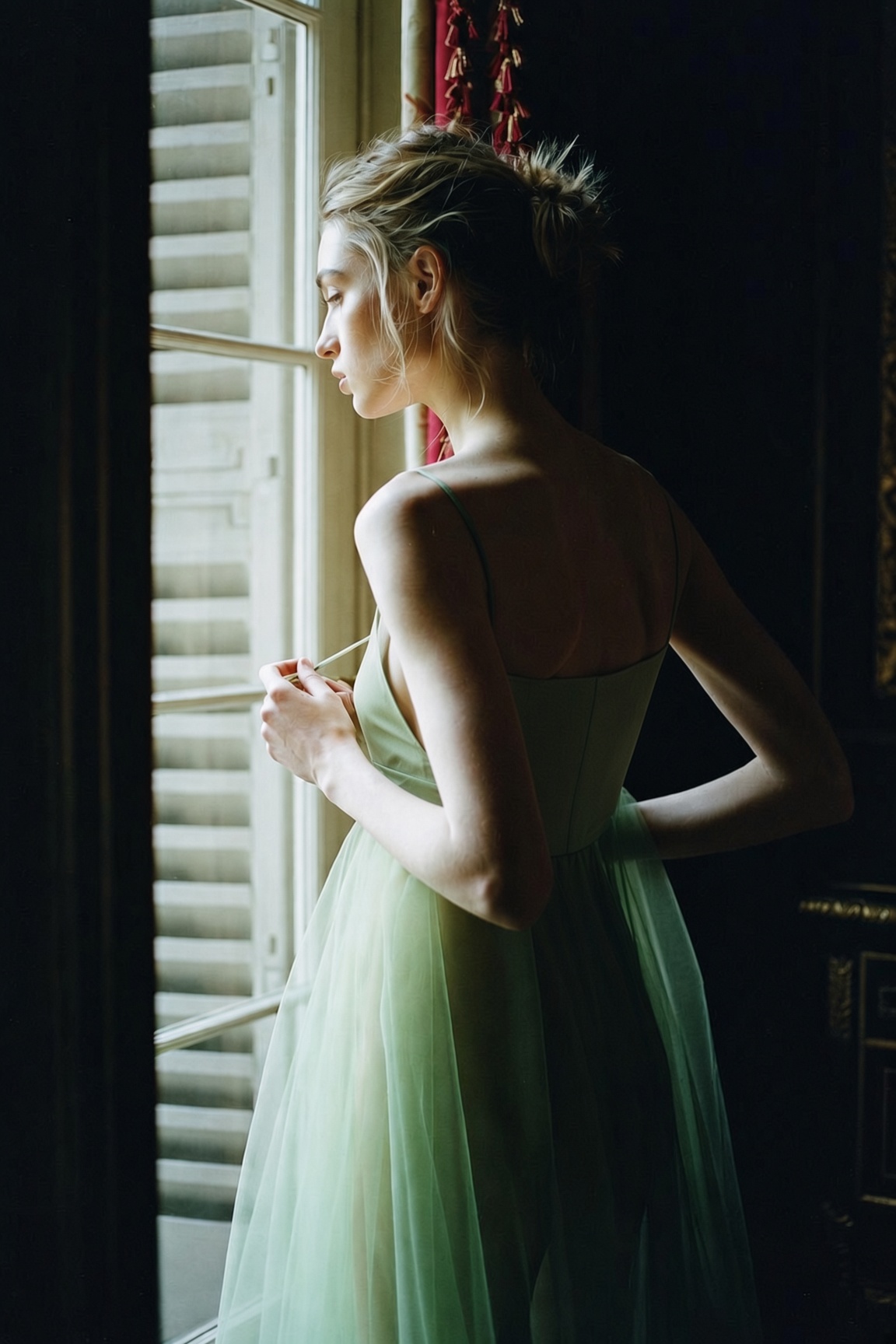
Not the naked dress. A layer, worn over a slip and under a coat.
Sheer is usually a summer argument. This autumn it is not, and the reason has nothing to do with showing skin.
At Prada, Miuccia Prada and Raf Simons sent fifteen models out four times each, removing one layer every round. Sixty looks from fifteen women. The models were not changing backstage into new outfits — they were taking off what they wore and appearing in whatever lay beneath it. The house called the collection a fascination with the process of layering, of transforming through the day, through your clothes. Backstage the notes read: layers of lives, of feeling. Thick leathers collided with sheer skirts worn alongside big sweaters.
It was not only Prada. Simone Rocha treats sheer as a base for embellishment and ribbon rather than as exposure — the printed organza here is that argument, made wearable. Valentino has cut tulle at full length for decades and did it again. Missoni and Magda Butrym both used weight to make transparency behave.
The honest objection to all of this is that what walks a runway is not what women wear. It is a fair objection and it is usually right. But the fall version answers it, because fall sheer is not the naked dress. It is a layer. The transparency reads at a hem, a sleeve, a shoulder — over a slip, under a coat, above a knit. Less about revealing skin and more about creating depth, texture and movement.
The proof is in how these pieces are sold. The tulle dress in the photograph above is listed with three words that settle the whole argument: slip sold separately. It is not a dress that happens to be see-through. It is a layer, and the house says so.
So the rule is simple. Something underneath, always — a slip, a cami, a plain black knit. One sheer piece, never two. And the thing beneath it should be so plain that the transparency is the only event in the outfit.
Mine is the Róhe silk organza midi over a plain black slip. It reads as an ordinary dress until you are standing next to it, which is the entire point.— K.W., Editor-in-Chief
Tap any piece below to shop the whole edit.

The organza shirt tucked into a black trouser, or the sheer skirt over a slip with a fine knit. A flat shoe.
One sheer dress, a plain slip beneath it, a black heel. Nothing at the throat and nothing over it.
Something underneath, always. Sheer over bare skin is a different garment and a different evening.
Two sheer pieces at once. And anything sheer over anything patterned.
Start with the Missoni.
Volume covers more than it shows.
Semi-sheer rather than sheer, which is the version that leaves the house. The knit carries its own opacity.
The house built its name on transparency used structurally. The draping is what covers, not a lining.
Tiers of silk over each other. Each layer is sheer; four of them together are not.
Off the shoulder in tulle, full to the floor. Wear it with a flat and nothing at the neck.
The print does the covering. A pattern on sheer reads as cloth rather than as skin.
Organza holds a shape where tulle floats. It stands away from the body on its own.
Plain organza, no print, no trim. The cut is the entire garment.
Floral organza, full length. The first maxi if you have never worn sheer.
Start with the Róhe.
The length that works in daylight — with a slip.
The house treats sheer as a base for decoration rather than as exposure. This is that argument, printed.
Silk organza rather than nylon — it has weight, and weight is what stops sheer looking cheap.
Cut close through the body with the sheerness at the sleeve and hem. The safest shape in the group.
The quietest sheer dress here. It reads as a plain midi until you are close.
Asymmetry moves the transparency off centre, so it lands where you decide rather than where it falls.
Start with the Simone Rocha black organza.
Over a slip, under a knit. The easiest half of this.
Full length tulle from the house that has made this shape for decades. Wear it with a fine black knit.
Silk rather than net, so it falls instead of standing. The most wearable skirt in the group.
Black organza reads as texture rather than transparency. This is the one you wear to work.
Silk organza midi. The skirt if the Valentino is the idea and this is the buy.
Start with the SIMKHAI.
The layer that changes a jacket you already own.
Appliqué placed where you would want covering. The decoration is doing structural work.
Lace is sheer with a pattern built in, which is why it has always been the acceptable version.
A blouse rather than a top — collar, cuffs, buttons. It goes under a suit.
Start with the Alfie.
Collar, placket, cuff. The office version.
Silk organza cut as a proper shirt. Collar, placket, cuff — everything except opacity.
The same idea as the Alfie, a little louder. Tucked into a black trouser.
Cotton in the blend takes the shine out. It reads as a shirt first and sheer second.
Start with the Prada.
Where the season actually landed: sheer as a coat.
The coat from the collection that made this a trend. Translucent outerwear over heavier layers — the whole idea, in one piece.
A cardigan you can see through. It goes over a slip dress and turns it into daywear.
A sheer knit is the quietest version of all of this. Under a coat, nobody would call it a trend.
Every piece in this edit, by the houses behind it. The houses on this page.
Sheer stopped being about what it shows the moment it became a layer. Something underneath, one piece only, and the rest of the outfit silent.— ESVRA